


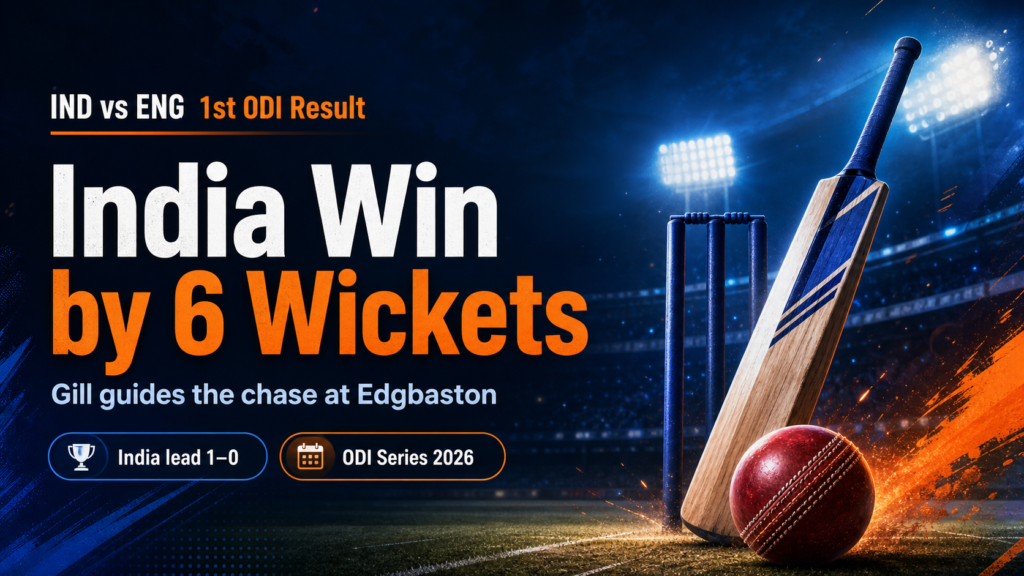
IND vs ENG 1st ODI Result • 14 July 2026 • Edgbaston
India vs England 1st ODI result: India opened the ODI series with a composed six-wicket chase. England made 258 before Shubman Gill’s 80 helped India reach 262 for 4 in 45.2 overs.
The India vs England 1st ODI result felt like a clean format reset for India. After the intensity of the T20 leg, this was a 50-over chase built on patience, batting depth and smart tempo control. England had enough runs to ask questions, but India rarely allowed the chase to become chaotic.
1. India vs England 1st ODI Result: Full Score Summary
| Team | Score | Top Performer | Match Situation |
|---|---|---|---|
| England | 258 | Joe Root 76*, Liam Dawson 68 | Recovered from a collapse, but lacked enough bowling control later |
| India | 262/4 | Shubman Gill 80, Axar Patel 57*, Washington Sundar 52* | Chased with wickets in hand and better tempo |
| Result | India won by 6 wickets | Gill anchored the chase | India lead the ODI series 1-0 |
2. Turning Point: Gill Made the Chase Look Safer Than It Was
Gill’s innings shaped the result
Shubman Gill’s 80 was the difference between a tense chase and a controlled one. He did not need to dominate every over. Instead, he protected India from scoreboard pressure, rotated strike and punished loose balls.
That is why the India vs England 1st ODI result should be remembered as a chase shaped by maturity more than fireworks.
England needed one more breakthrough
- England needed wickets in clusters after India’s platform.
- Gill’s tempo kept the required rate manageable.
- India’s lower middle order had enough room to finish calmly.
3. How India Controlled the Chase
India’s chase worked because the batting order avoided panic. A target of 259 in English conditions is never automatic, especially under lights and against a home attack. Yet India treated the chase like an ODI chase should be treated: survive the strong spells, absorb pressure and keep wickets for the final third.
Axar Patel and Washington Sundar then gave the innings a composed finish. Their role mattered because England were still looking for one messy passage to pull the game back. India did not give them that opening.
4. What Went Wrong for England?
Par score, not winning score
England’s 258 kept them alive, but India’s chase showed the total was slightly under what the pitch could allow once batters settled.
Gill was allowed to settle
England needed to make Gill play riskier strokes earlier. Once he found rhythm, India controlled the middle overs.
No late squeeze
With India four down, England still had a chance. But the visitors kept the chase clean and avoided the collapse England needed.
5. Key Player Impact from the 1st ODI
| Player | Impact | Why It Mattered |
|---|---|---|
| Shubman Gill | 80 in the chase | Controlled India’s innings and reduced pressure on the finishers |
| Axar Patel | Calm finishing role | Helped India cross the line without late drama |
| Washington Sundar | Useful lower-order support | Gave India balance and composure in the final phase |
| England bowling group | Needed more middle-over pressure | Could not turn Gill’s innings into a collapse around him |
6. What Comes Next in the ODI Series?
The result gives India a valuable 1-0 lead, but the series is not settled. England will look for a sharper batting finish and more wicket-taking pressure in the next ODI. India, meanwhile, will want the same blueprint: top-order control, middle-over calm and a clean finish.
For India, the biggest positive is that the ODI rhythm arrived quickly. For England, the immediate task is clear: turn starts into a bigger total and force India’s chase into uncomfortable territory.
7. India vs England 1st ODI Result: Frequently Asked Questions
Who won the India vs England 1st ODI?
India beat England by six wickets at Edgbaston in Birmingham on 14 July 2026.
What were the final scores in the 1st ODI?
England scored 258 in 47.5 overs. India reached 262 for 4 in 45.2 overs.
Who was India’s top scorer?
Shubman Gill top-scored for India with 80 and controlled the successful chase.
What was the series score after the 1st ODI?
India led the three-match ODI series 1–0 after winning the opening match.
Play the ODI Way: Control, Timing and Better Gear
Upgrade your cricket setup with match-ready bats, balls and kits from AS SportsNation.
Sources and verification: Match result, venue, series context and score details were checked against current match updates before publishing. Final scorecards and playing XIs should be cross-checked with official match centres for archival accuracy.